
Fast-curing, UV-stable coatings
Polyaspartic Floors in Salt Lake City, UT
Back in your garage in a day or two, with a finish that holds its color in high-altitude sun.
- Free estimates on site: we measure your slab and inspect it in person
- A moisture reading on the slab before we put down a single coat
- A written quote that explains every surface prep step
Epoxy or Polyaspartic: The Real Differences
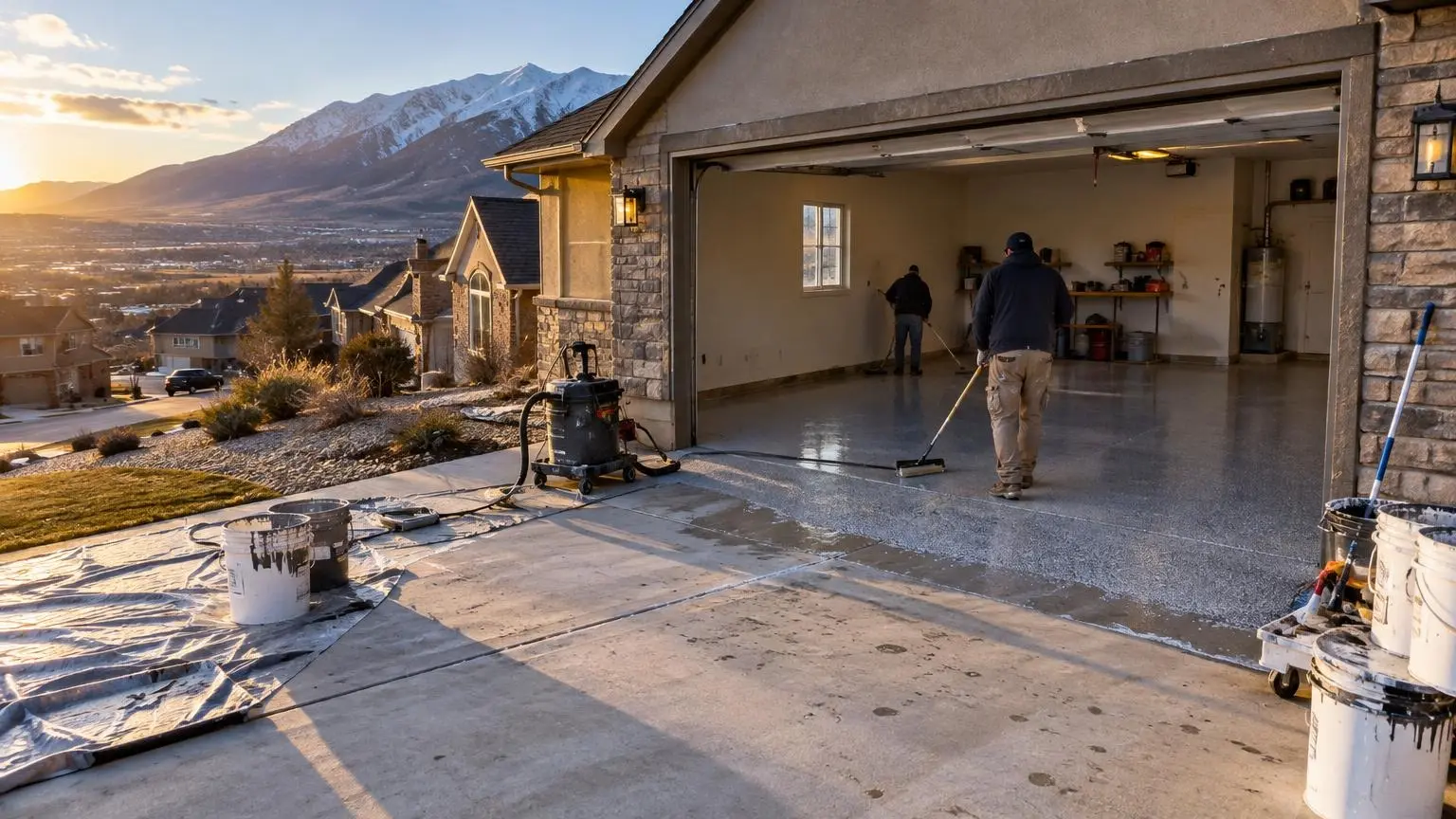
Polyaspartic floors in Salt Lake City answer the most common question we get at estimates: is there something better than epoxy? For many garages the answer is yes, or at least something that pairs better with it. Chemically, a polyaspartic floor coating belongs to the aliphatic polyurea family. It cures far faster than epoxy, it does not yellow in sunlight, and it resists chemicals well. Epoxy Flooring Salt Lake City installs full polyaspartic systems and hybrid floors that use an epoxy base under a polyaspartic topcoat, depending on the slab and how you use the space.
Sun at 4,300 feet
The city sits at roughly 4,300 feet, and summers are long, dry and bright. Garages with west- or south-facing doors can have sunlight on the floor for hours. Sunlight is where the two resins part ways: HomeGuide grades polyaspartic excellent on UV, and plain epoxy merely poor to fair. In practice, plain epoxy that sees daily sun can amber and chalk over time, while a polyaspartic surface keeps its color. That is the main reason most of our garage floors finish with polyaspartic, even when the base is epoxy.
Cure time you can plan around
HomeGuide lists polyaspartic at a full cure of 1 to 2 days, with heavy vehicles allowed after about 24 to 48 hours; epoxy, by contrast, may need up to seven days. Bob Vila puts walking at 3 to 4 hours and cars at 24 hours for polyaspartic, against 12 hours and 3 days for epoxy. If your household has two cars, a single garage and snow on the way, keeping them off the street sooner is a real difference. The faster cure also makes polyaspartic useful for businesses that cannot close for long.
Fast curing also means less time for dust, insects and pets to land in a wet coat, which matters in a garage with a door that has to open at some point. And because the floor can be back in service sooner, it is easier to schedule a coating between storms in early winter or late fall, when the window between dry days can be short.
Thinner coats, different strengths
HomeGuide puts a polyaspartic coat at about 2 to 6 mils thick, compared with 10 to 20 mils for a coat of epoxy. Epoxy builds body and fills small pits in the concrete. Polyaspartic goes on thinner but is very hard and flexible, and it handles abrasion and salt brine well. That is why hybrid systems are so common: epoxy for build and bond where the slab needs it, polyaspartic on top for wear and sunlight. On sound, newer concrete a full polyaspartic system can be the right choice. We make that call after we see and test the floor.
Cold-weather installs
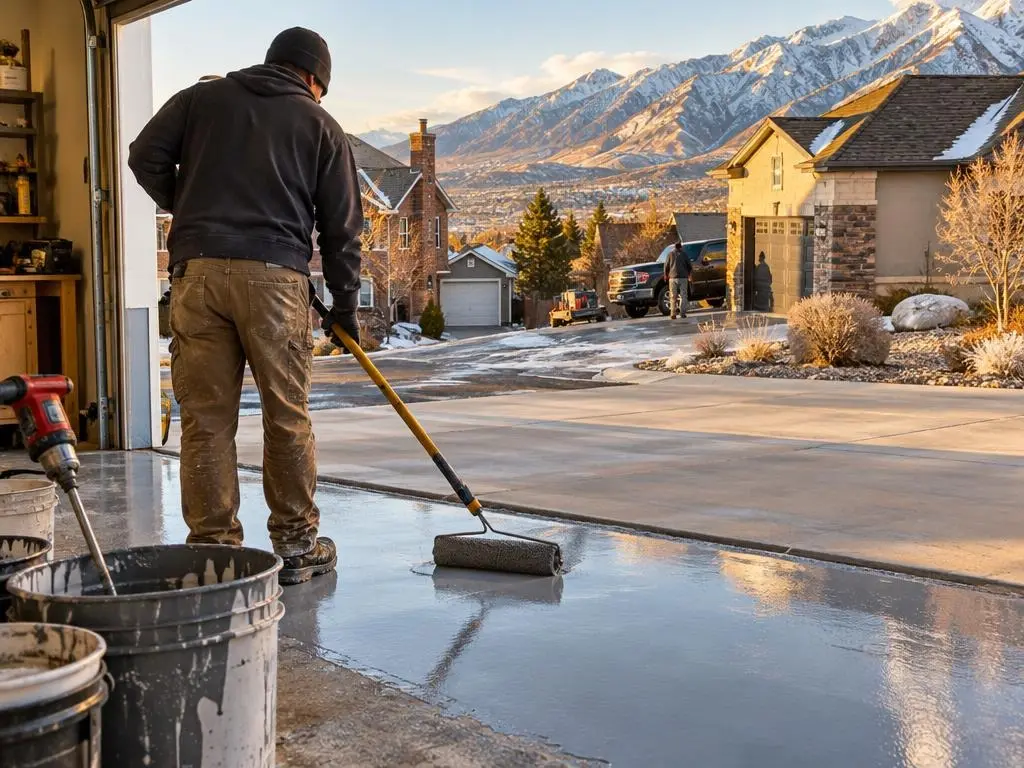
Salt Lake City averages about 127 days a year at or below freezing. According to HomeGuide, polyaspartic goes on across a broad range of temperatures, which helps in unheated garages during the shoulder seasons when epoxy cures slowly. Cold still matters. The slab, the air and the dew point all have to be within the product's limits, and we check them before each coat. If the readings are wrong, we move the day rather than gamble with your floor.
Moisture is the other condition we watch. HomeGuide notes that polyaspartic tolerates higher moisture content in the concrete than epoxy does, which can help on older slabs. It is not a cure for a wet basement or a garage that takes on water, though. The moisture test still comes first, and the reading still decides the primer.
The tradeoffs
Polyaspartic is not the answer for every floor. In the published ranges, its price per square foot runs higher than epoxy. Its fast set means crews have less working time, which is why we work in smaller sections and never rush. A full polyaspartic system can also be thinner than a multi-coat epoxy build, so a rough, pitted slab may need an epoxy primer or extra repair first. Bob Vila calls polyaspartic a job that is not for DIY, and we agree: it sets too quickly for a weekend project.
Where we use it
Most garages, especially those with sun on the floor or heavy winter brine. Flake floors, where the clear topcoat carries the wear. Shops and small commercial spaces that need to reopen quickly. Basements, where its low odor and fast cure can help, though sunlight is not a factor there. We explain the choice for your floor in the written quote.
Whichever way your floor goes, the quote names the product for each layer, the number of coats and the reason we chose them. If you would rather have a different system than the one we recommend, we will tell you plainly what that changes in cure time, look and cost so you can decide with the full picture.
Polyaspartic Systems We Install
Polyaspartic can be the whole floor or just the layer you walk on.
Full polyaspartic system
Primer, color and topcoat all in polyaspartic, for sound slabs where speed matters most.
Epoxy base, polyaspartic top
Epoxy underneath for build and bond, then polyaspartic on top to handle sun and traffic. Our most common garage system.
Polyaspartic over flake
A clear polyaspartic seal over a vinyl chip broadcast.
Clear sealer over bare concrete
A clear polyaspartic coat on ground concrete when you want protection without color.
Fast-return business floors
Phased installs for shops and storefronts that cannot close for long.
Typical Polyaspartic Floor Coating Costs
| Job | Published range | Source |
|---|---|---|
| Polyaspartic, per sq ft | $5 to $12 | HomeGuide |
| One-car garage | $1,400 to $4,700 | HomeGuide |
| Two-car garage | $2,000 to $6,900 | HomeGuide |
| Three-car garage | $2,900 to $10,400 | HomeGuide |
| 500 sq ft floor | $2,500 to $6,000 | HomeGuide |
| Typical project | $1,440 to $3,240 | Bob Vila |
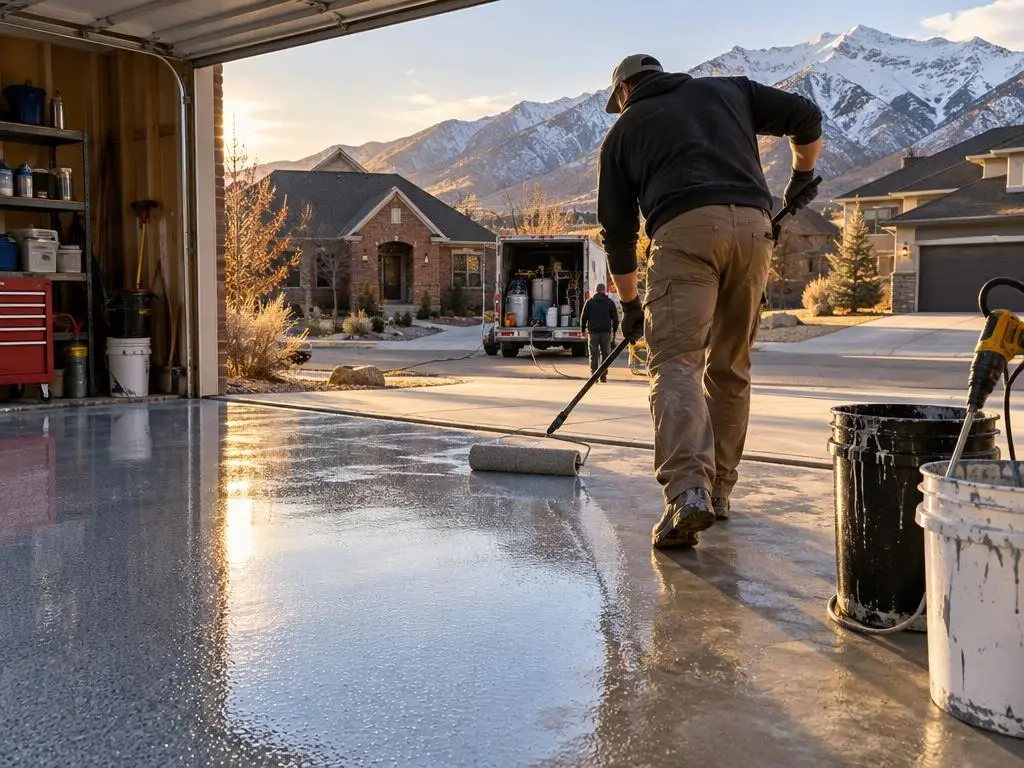
Two national guides, two different ranges. Your slab, the system and any repairs set the real number, which is the total on your written estimate.
How We Install Polyaspartic
1. Test and quote
We test moisture, check the slab and write up the system and total.
2. Grind and repair
Diamond grinding and patching, the same as any coating.
3. Check conditions
Slab temperature, air temperature and dew point are read before mixing.
4. Coat in sections
Small batches applied section by section because the product sets quickly.
5. Return to use
Foot traffic within hours, and cars back in typically after a day or two, with the exact timing set by the product.
Why Choose Us for Polyaspartic Floors
Honest about the tradeoffs
We tell you when epoxy, polyaspartic or a hybrid fits the floor better.
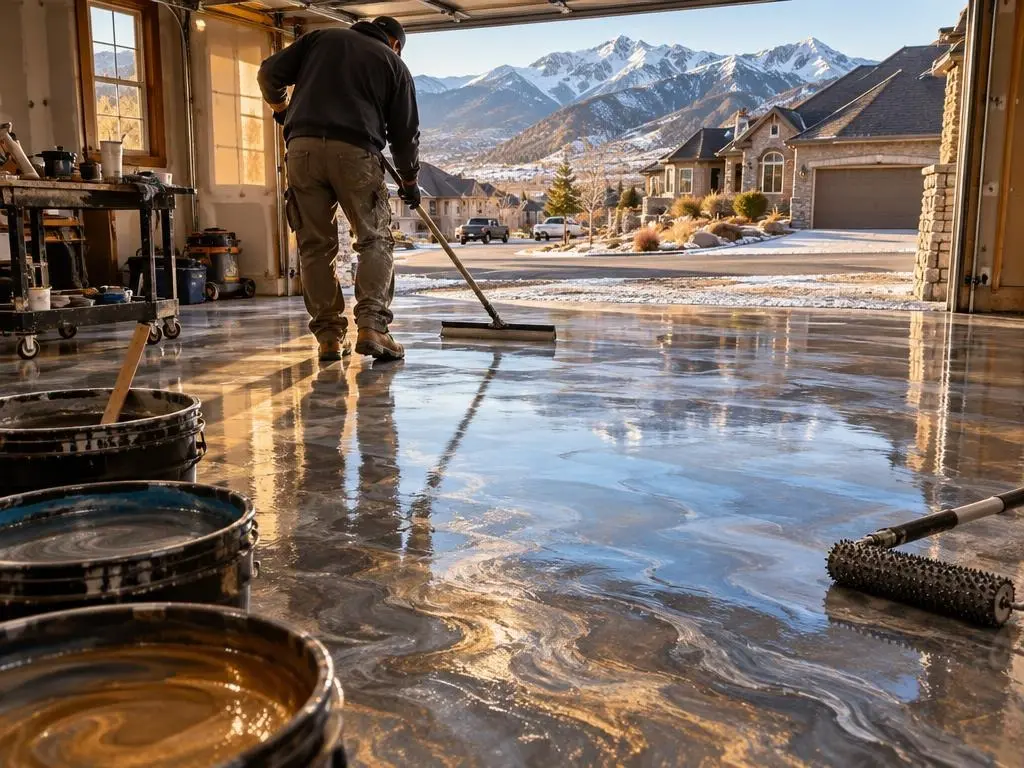
Conditions checked every coat
Fast-set products leave no room for guessing, so we measure first.
Dates you can plan around
You know when you can walk and park before we start.
Polyaspartic Floors Questions
Is polyaspartic better than epoxy?
It is better at some things: UV resistance, cure speed and abrasion. Epoxy builds thickness and is cheaper. That is why lots of garages get both, with epoxy as the base and polyaspartic as the topcoat.
When can I drive onto a new polyaspartic floor?
HomeGuide says heavy vehicles can usually return after 24 to 48 hours, and Bob Vila puts cars at about 24 hours. Cold slabs slow that down, so we give you dates for your floor.
Does polyaspartic work in a cold garage?
It cures across a wider temperature range than epoxy, which helps in spring and fall. Slab and air still need to be within the product's limits, so we measure before coating.
Is polyaspartic a DIY product?
Not really. It sets fast, so it is easy to leave lap marks or run out of working time. Bob Vila also describes it as not for DIY.
Polyaspartic Floors Service Areas
- Epoxy Flooring in Salt Lake City, UT
- Epoxy Flooring in West Valley City, UT
- Epoxy Flooring in Murray, UT
- Epoxy Flooring in Sandy, UT
- Epoxy Flooring in Draper, UT
- Epoxy Flooring in South Jordan, UT
- Epoxy Flooring in West Jordan, UT
- Epoxy Flooring in Taylorsville, UT
- Epoxy Flooring in Holladay, UT
- Epoxy Flooring in Cottonwood Heights, UT
- Epoxy Flooring in Millcreek, UT
- Epoxy Flooring in Midvale, UT
- Epoxy Flooring in Riverton, UT
- Epoxy Flooring in Herriman, UT
- Epoxy Flooring in Bountiful, UT
- Epoxy Flooring in North Salt Lake, UT
- Epoxy Flooring in Woods Cross, UT
- Epoxy Flooring in Centerville, UT
- Epoxy Flooring in Magna, UT
- Epoxy Flooring in Kearns, UT
- Epoxy Flooring in South Salt Lake, UT
- Epoxy Flooring in Bluffdale, UT
- Epoxy Flooring in Lehi, UT
- Epoxy Flooring in Park City, UT
- Epoxy Flooring in Tooele, UT
Get a Polyaspartic Floors Estimate
Ask about polyaspartic at your free on-site estimate.