
Basements, storage rooms, gyms and laundry rooms
Basement Floor Epoxy in Salt Lake City, UT
We test the slab before anything else, because below-grade concrete decides what a coating can do.
- Free estimates on site: we measure your slab and inspect it in person
- A moisture reading on the slab before we put down a single coat
- A written quote that explains every surface prep step
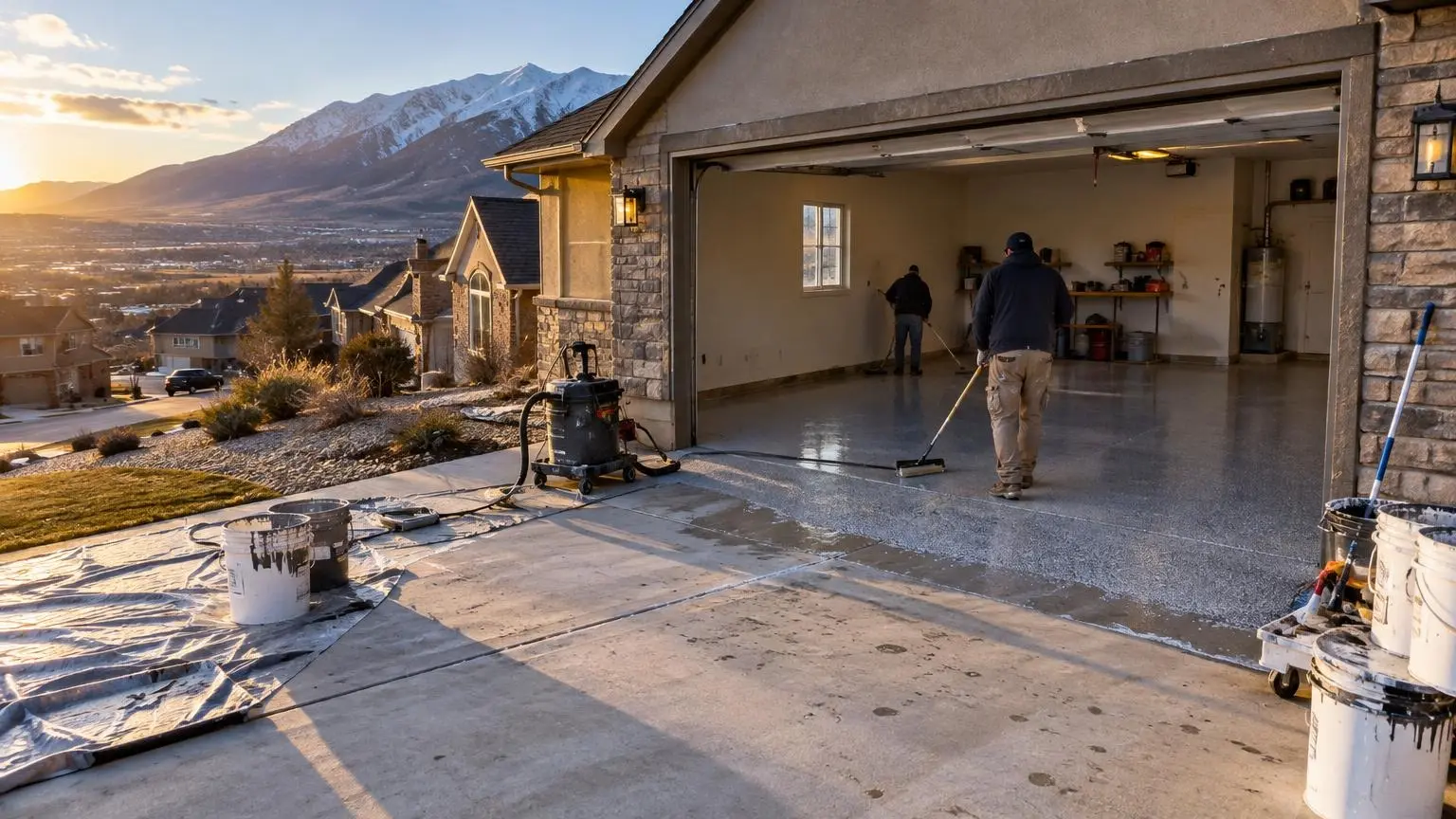
Below-Grade Concrete Starts With a Moisture Test
Basement floor epoxy in Salt Lake City is a different job from a garage floor. A basement has no road salt and little sunlight, but it sits below the ground, where the concrete is in contact with soil moisture all year. A basement floor coating can turn a bare, dusty slab into a clean, bright surface for a gym, a playroom, a laundry room or storage, but only if the slab is dry enough for the coating to stay bonded. Epoxy Flooring Salt Lake City runs a moisture test on each basement slab ahead of the quote, and that reading shapes the whole plan.
Why moisture testing comes first
Concrete is porous. Water vapor can move up through a slab from the soil below, even when the floor looks and feels dry. When a coating seals the top, that vapor can collect under it and push it off in blisters or peeling patches. HomeAdvisor notes that solid epoxy does not work well in high-moisture conditions. So we measure first. A low reading means a standard epoxy system will bond well. A higher reading means a moisture-tolerant primer, and a very high reading can mean the basement needs drainage or grading work before any coating will last. We tell you which case you are in.
We take readings in more than one spot, because moisture is rarely even across a basement. The corner by a downspout or a window well can read much higher than the middle of the room. We also look at the walls, the floor drain and any sump pit, since they tell us how water moves around the foundation.
Older homes, older slabs
Recent Census survey estimates date about 25.4% of Salt Lake City homes to 1939 or before. Many basements in homes of that age were poured without the plastic vapor barrier that is standard under newer slabs. They may also have old paint, tile adhesive, patched trenches from plumbing work or a rough, uneven surface. Mid-century basements in the older suburbs often have similar issues. These floors can still be coated, but they need more grinding, more repair and a careful moisture test.
Water in a dry climate
Salt Lake City is dry for most of the year, but basements here still see water. City Creek flooded downtown in 1952 and again in 1983, when crews turned streets into temporary channels. South Salt Lake is mostly flat with a fairly high water table. Snowmelt in spring soaks the ground around foundations, and a downspout that dumps next to the house can keep one corner of a basement damp. If we see signs of water coming in, such as staining at the base of walls, efflorescence or a musty corner, you hear about it before you pay for any coating.
Utility rooms are worth a mention. Water heaters, furnaces and softeners often sit on the basement floor, and they can leak. A sealed floor makes a small leak easier to spot and clean, and it keeps water from soaking into the slab. We coat around fixed equipment carefully and leave clearance where service access is needed.
Choosing a basement system
Most basements get a solid-color epoxy or a partial flake floor with a clear topcoat. A light color brightens a room with small windows. Partial flake hides lint and dust in laundry rooms. Home gyms get a thicker build and rubber mats in the lifting area. Finished living spaces sometimes go metallic for a decorative look. Because basements see little sun, UV is not the concern it is in a garage, and we can choose the topcoat for wear and cleanability instead.
Prep and odor
Every basement floor is diamond ground with dust collection to open the surface and remove old paint, adhesive and weak concrete. Cracks are filled and ground flush. Because basements have limited airflow, we plan ventilation during the install and choose products with that in mind. We also explain how long the room should stay closed while the coating cures, so you can plan around laundry and storage.
What a coating will not fix
A coating seals the surface of a slab. It does not stop water that is entering through walls, cracks that are moving, or a floor that is heaving. Those problems need a drainage, foundation or waterproofing fix first. If your basement needs that kind of work, we tell you plainly and wait until the slab is ready.
Done in the right order, a basement coating is one of the simpler ways to make below-grade space more usable. Fix the water, test the slab, grind and repair, then coat. We follow that order on every basement we take on and explain each step in the written quote. If you are finishing the basement later, coating first gives you a clean, sealed base to build on.
What a Basement Job Includes
Basement floors follow the same steps as any coating, with more attention to moisture.
Moisture testing
Readings taken on the slab before we quote, so the system matches the conditions.
Vapor-tolerant primer
A primer made for slabs with higher moisture readings, used when the test calls for it.
Grinding and repair
Diamond grinding, crack filling and removal of old paint or adhesive.
Solid color or flake
Light solid colors to brighten the room, or partial flake to hide dust and lint.
Gym and storage builds
Thicker coats for weights and shelving, with mats recommended where plates drop.
Metallic for finished rooms
A decorative poured finish for theaters, bars and living spaces.
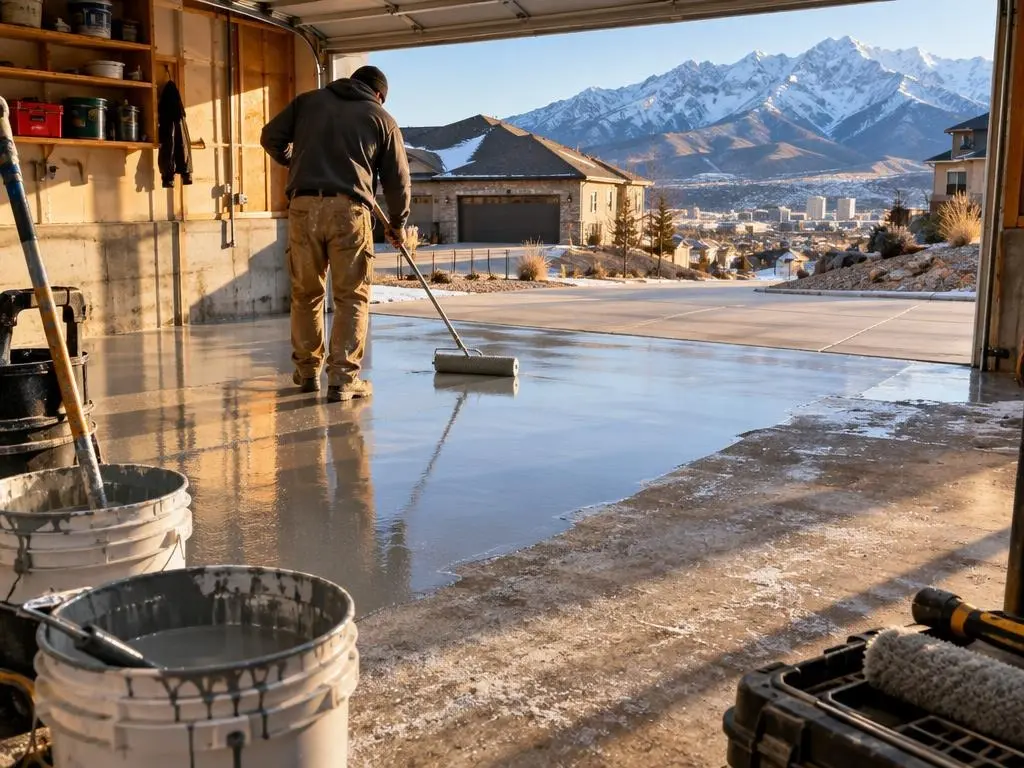
Typical Basement Floor Coating Costs
| Job | Published range | Source |
|---|---|---|
| Installed epoxy, per sq ft | $4 to $10 | HomeGuide |
| Kitchen-sized room (100 to 200 sq ft) | $400 to $2,000 | HomeGuide |
| 300 sq ft polyaspartic | $1,500 to $3,600 | HomeGuide |
| 600 sq ft polyaspartic | $3,000 to $7,200 | HomeGuide |
| Patching cracks and chips | $25 to $250 | This Old House |
| Contractor minimum charge | $500 to $1,000 | HomeAdvisor |
National ranges, not local quotes. A moisture-tolerant primer, old adhesive removal or crack repair can change the total, and the price is whatever your written estimate says once testing is done.
How We Coat a Basement
1. Visit and moisture test
We look for signs of water and test the slab before quoting.
2. Written quote
System, primer choice, prep steps and total in writing.
3. Grind and repair
Old paint and adhesive come off, and cracks are filled.
4. Prime and coat
The primer the test calls for, then color, flake or metallic and a topcoat.
5. Cure
We tell you when to walk on it and when to move furniture and storage back.
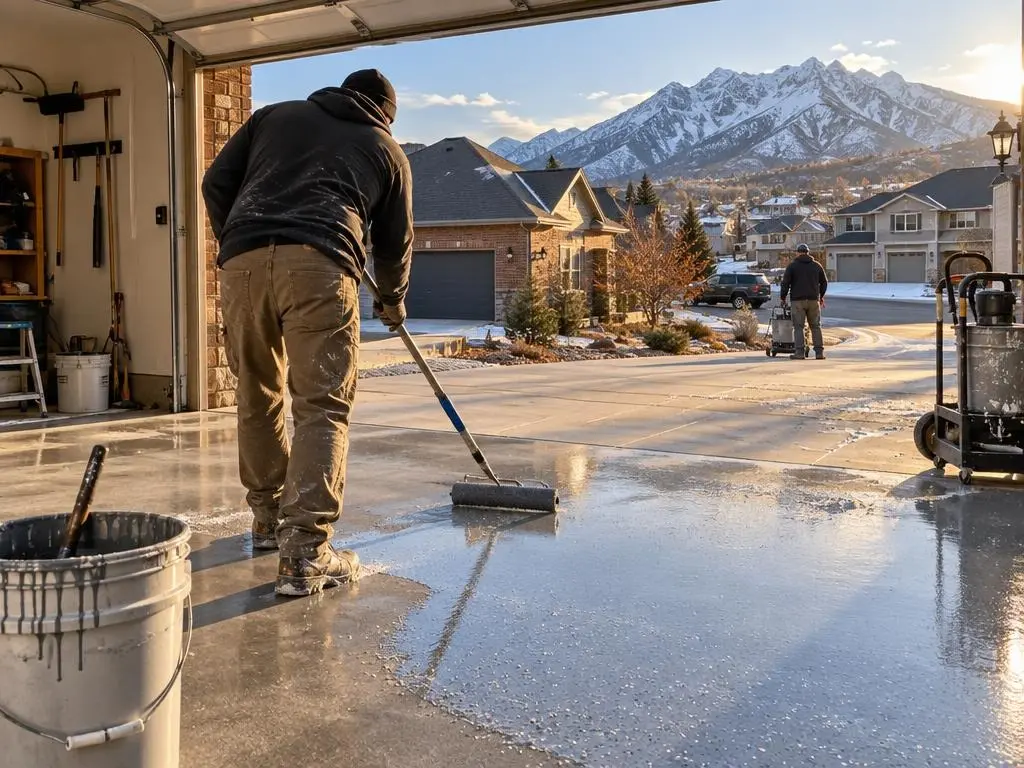
Why Choose Us for Basement Floor Epoxy
Testing before pricing
The moisture reading shapes the system, so we take it first.
Straight answers on water
If a coating will not fix the problem, we tell you before you pay.
Older basements welcome
We expect paint, adhesive and patches and price the prep honestly.
Basement Floor Epoxy Questions
Is a damp basement floor too wet for epoxy?
It depends on how damp. The moisture reading shows us whether a standard system will hold, whether it needs a vapor-tolerant primer, or whether the water source has to be fixed first.
Is basement floor epoxy better than carpet?
For storage, laundry, gyms and playrooms, a coating is easier to clean and does not hold moisture or odors. You can still add area rugs on top.
How long does a basement coating take?
Most basements take a few days from grinding to final coat, then cure time before furniture goes back. We give you dates in the quote.
Can you coat over old basement paint or tile glue?
No. We grind off old paint and adhesive first, so the new coating grips the bare slab.
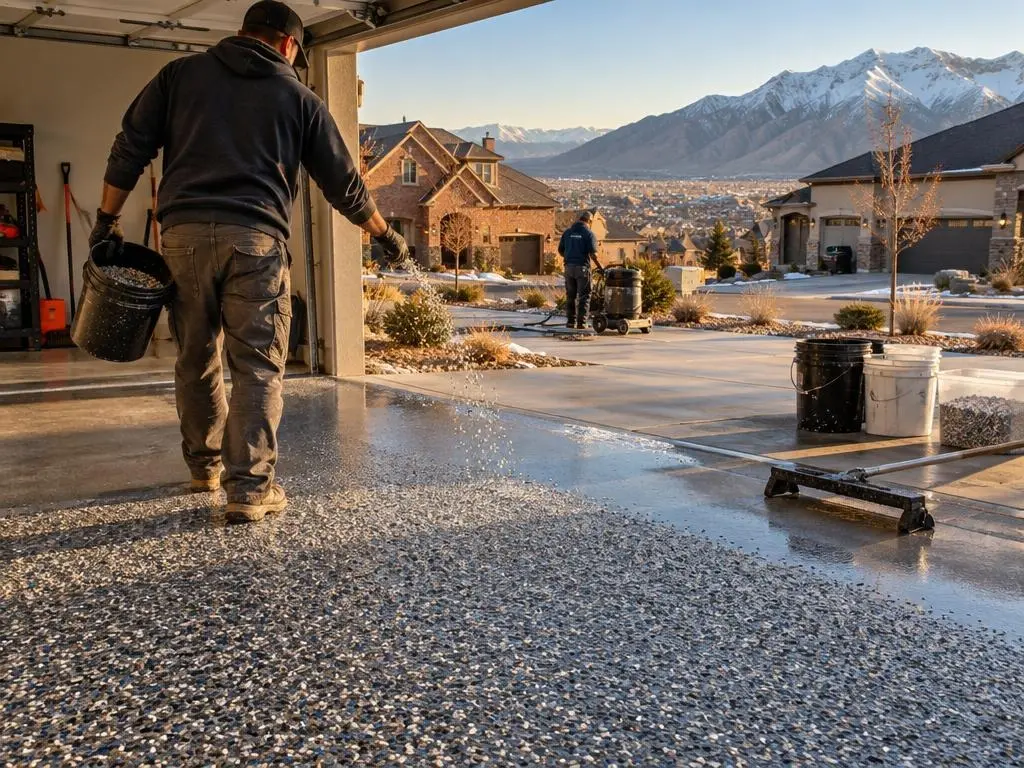
Basement Floor Epoxy Service Areas
- Epoxy Flooring in Salt Lake City, UT
- Epoxy Flooring in West Valley City, UT
- Epoxy Flooring in Murray, UT
- Epoxy Flooring in Sandy, UT
- Epoxy Flooring in Draper, UT
- Epoxy Flooring in South Jordan, UT
- Epoxy Flooring in West Jordan, UT
- Epoxy Flooring in Taylorsville, UT
- Epoxy Flooring in Holladay, UT
- Epoxy Flooring in Cottonwood Heights, UT
- Epoxy Flooring in Millcreek, UT
- Epoxy Flooring in Midvale, UT
- Epoxy Flooring in Riverton, UT
- Epoxy Flooring in Herriman, UT
- Epoxy Flooring in Bountiful, UT
- Epoxy Flooring in North Salt Lake, UT
- Epoxy Flooring in Woods Cross, UT
- Epoxy Flooring in Centerville, UT
- Epoxy Flooring in Magna, UT
- Epoxy Flooring in Kearns, UT
- Epoxy Flooring in South Salt Lake, UT
- Epoxy Flooring in Bluffdale, UT
- Epoxy Flooring in Lehi, UT
- Epoxy Flooring in Park City, UT
- Epoxy Flooring in Tooele, UT
Get a Basement Floor Epoxy Estimate
Book a free basement visit in Salt Lake City; the moisture test comes with it.